
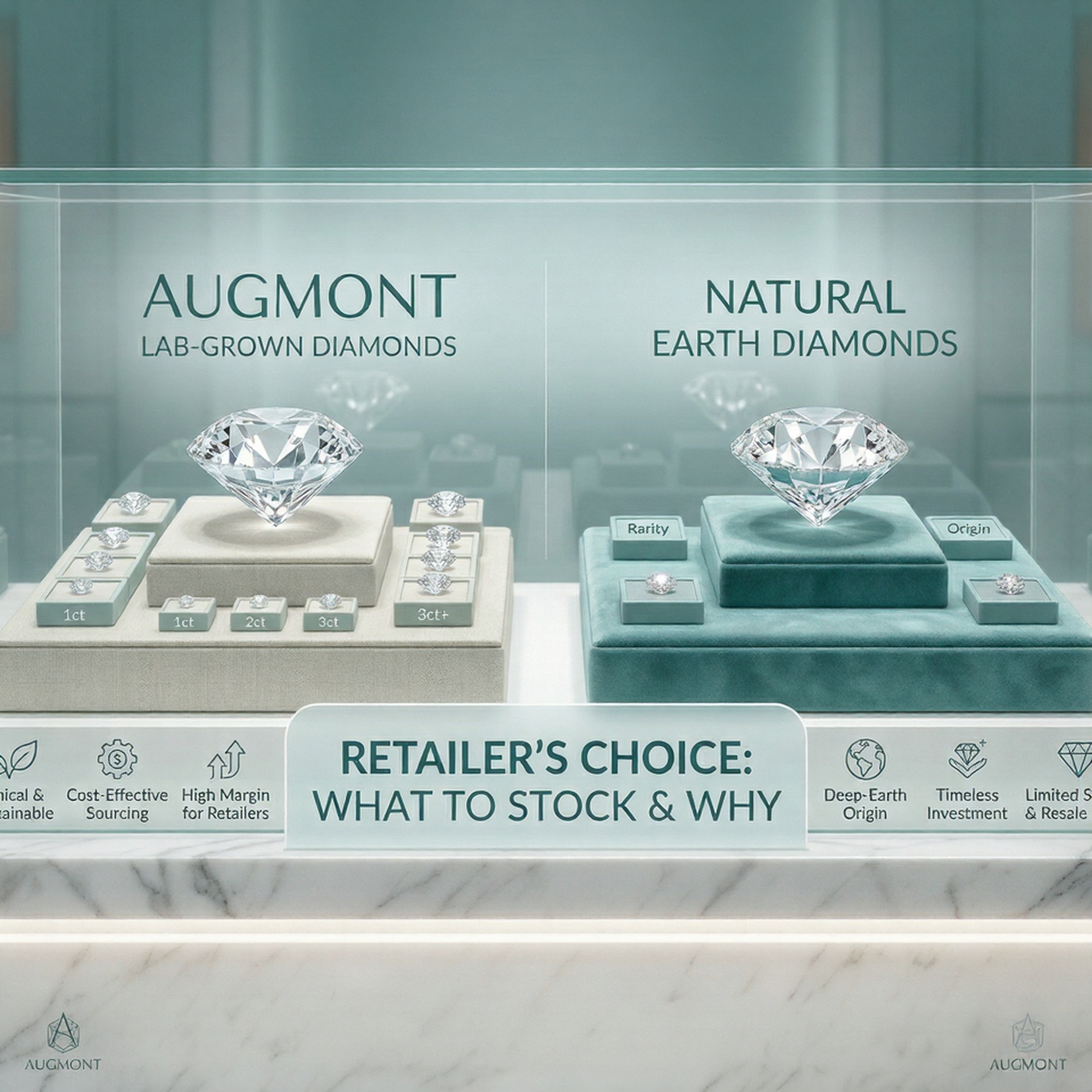
The diamond industry is undergoing a significant transformation as lab-grown diamonds continue to gain visibility alongside natural diamonds. While natural diamonds have long dominated the market, advancements in technology and changing consumer preferences are driving increased interest in lab-grown alternatives.
For retail jewelers, this shift presents both an opportunity and a strategic question: what should you stock, and how can you position your inventory to meet evolving customer demand? Understanding the role of lab-grown diamonds in today’s jewelry market can help retailers make more informed stocking decisions and remain competitive in a rapidly changing environment.
What This Blog Offers
This blog explores the differences between natural and lab-grown diamonds and examines how retailers can balance both categories within their inventory. It also highlights why lab-grown diamonds are becoming an important addition to retail collections and how they can help businesses address new consumer segments while maintaining traditional diamond offerings.
Understanding the Retail Opportunity: An Overview
Retailers today are operating in a market where customers are more informed and value-driven than ever before. Lab-grown diamonds have emerged as a compelling option because they offer the same physical and chemical properties as natural diamonds while typically being available at a lower price point. For retailers, this creates a new category that can complement traditional diamond inventory rather than compete with it directly. Offering lab-grown diamonds allows retailers to broaden their product range and appeal to customers who might otherwise postpone or reconsider purchasing diamond jewelry.
Why Retailers Are Adding Lab-Grown Diamonds
- Price Accessibility for a Wider Customer Base
One of the biggest advantages of lab-grown diamonds is their affordability. Because they are typically priced lower than natural diamonds of comparable size and quality, retailers can attract customers who are looking for value-driven purchases or larger stones within a limited budget. This allows jewellers to capture a broader segment of the market, including first-time diamond buyers. - Appeal to Younger Consumers
Younger buyers, particularly millennials and Gen Z, are more open to alternative diamond options. Lab-grown diamonds align well with their preference for modern, transparent, and innovative products. By offering lab-grown diamonds, retailers can connect with this emerging customer segment and stay relevant in a market shaped by evolving consumer attitudes. - Greater Design and Product Flexibility
Lab-grown diamonds give retailers the opportunity to experiment with creative designs and larger stone settings without dramatically increasing price points. This flexibility enables jewellers to introduce fashion-forward collections, statement pieces, and contemporary jewelry designs that might be difficult to offer with natural diamonds alone. - Expanding Product Categories and Price Points
Adding lab-grown diamonds allows retailers to diversify their inventory across different price segments. They can introduce entry-level engagement rings, everyday diamond jewelry, and fashion collections to reach customers who may not initially consider purchasing natural diamonds. This expansion can help increase footfall and improve conversion rates in retail stores.
Final Thoughts
For retailers, the discussion of natural versus lab-grown diamonds should not be framed as a choice between the two. Instead, it represents an opportunity to diversify inventory and better align with modern customer expectations. By strategically incorporating lab-grown diamonds into their collections while maintaining traditional diamond offerings, retailers can position themselves to capture demand across multiple customer segments and stay relevant in the evolving diamond marketplace.