
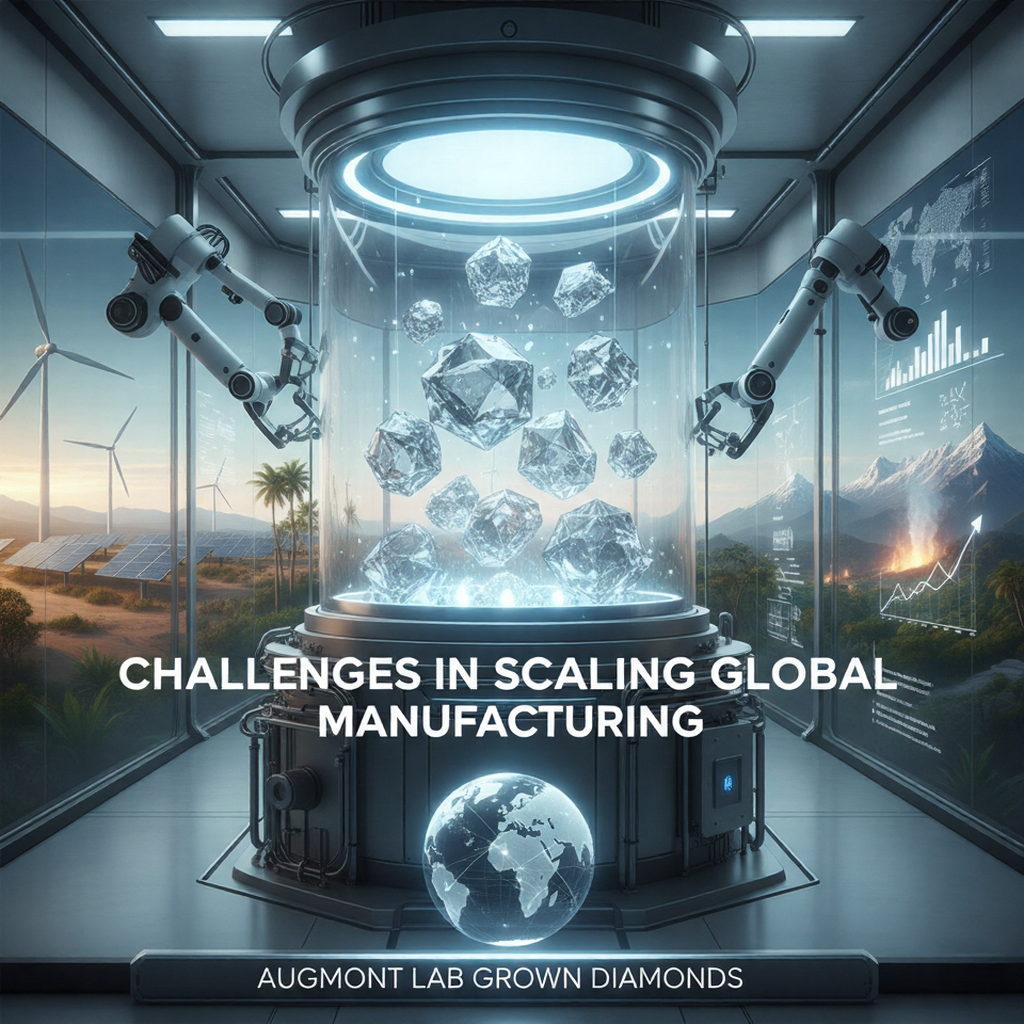
The lab-grown diamond sector has moved from a disruptive niche to a massive global industry. As of 2026, the market for lab-grown diamonds continues to expand, but scaling manufacturing to meet global demand is not as simple as adding more machines. B2B stakeholders, including equipment manufacturers, wholesalers, and retailers, must navigate a complex web of technical, economic, and regulatory hurdles.
Energy Demands and Sustainable Scaling
One of the primary challenges in scaling lab-cultured diamonds is the sheer amount of energy required. Whether using High Pressure High Temperature (HPHT) or Chemical Vapor Deposition (CVD), the process is energy-intensive.
HPHT requires massive presses that simulate the weight of the earth, while CVD uses high-power microwave generators to create plasma. As companies scale, they face rising electricity costs and increasing pressure from B2B partners to prove their sustainability. Manufacturers are now forced to locate their factories in regions with stable, green energy grids to maintain their “eco-friendly” value proposition.

Technical Precision at Scale
Growing a few stones is one thing; growing thousands of high-quality lab-created diamonds consistently is another.
- System Stability: In CVD manufacturing, even a tiny change in gas pressure or a microscopic leak in the vacuum chamber can ruin an entire batch.
- Maintenance Costs: The high-tech reactors and presses used in production require constant maintenance. As a facility scales from ten machines to hundreds, the need for specialized engineers and expensive replacement parts grows exponentially.
- Yield Issues: Scaling often leads to a “race to the bottom” in quality. Maintaining the best color and clarity grades becomes harder when the focus shifts to high-volume output.
Supply Chain and Regulatory Hurdles
Scaling lab-manufactured diamonds globally means dealing with international trade laws that are still catching up.
- Terminology Standards: Different countries have different rules on how diamonds must be labeled. For example, new 2026 guidelines in major hubs like India require strict adherence to terms like “laboratory-grown” to prevent consumer confusion.
- Export Controls: Much of the machinery and “diamond seeds” used in production is concentrated in a few countries. Sudden export controls or trade tariffs can halt a global expansion plan overnight.
- Price Volatility: Massive overproduction in certain regions has caused wholesale prices to drop significantly. For B2B buyers, this creates a challenge in inventory valuation. If you buy a large stock today, it might be worth 20% less by the time it reaches the retail shelf.
Final Thoughts
Scaling the production of lab-grown diamonds offers incredible opportunities for the jewelry and industrial sectors. However, the path to global growth is blocked by high energy needs, technical complexity, and a shifting regulatory landscape. Success in this space requires more than just capital; it requires a strategic approach to technology and a commitment to transparent, high-quality production standards.