
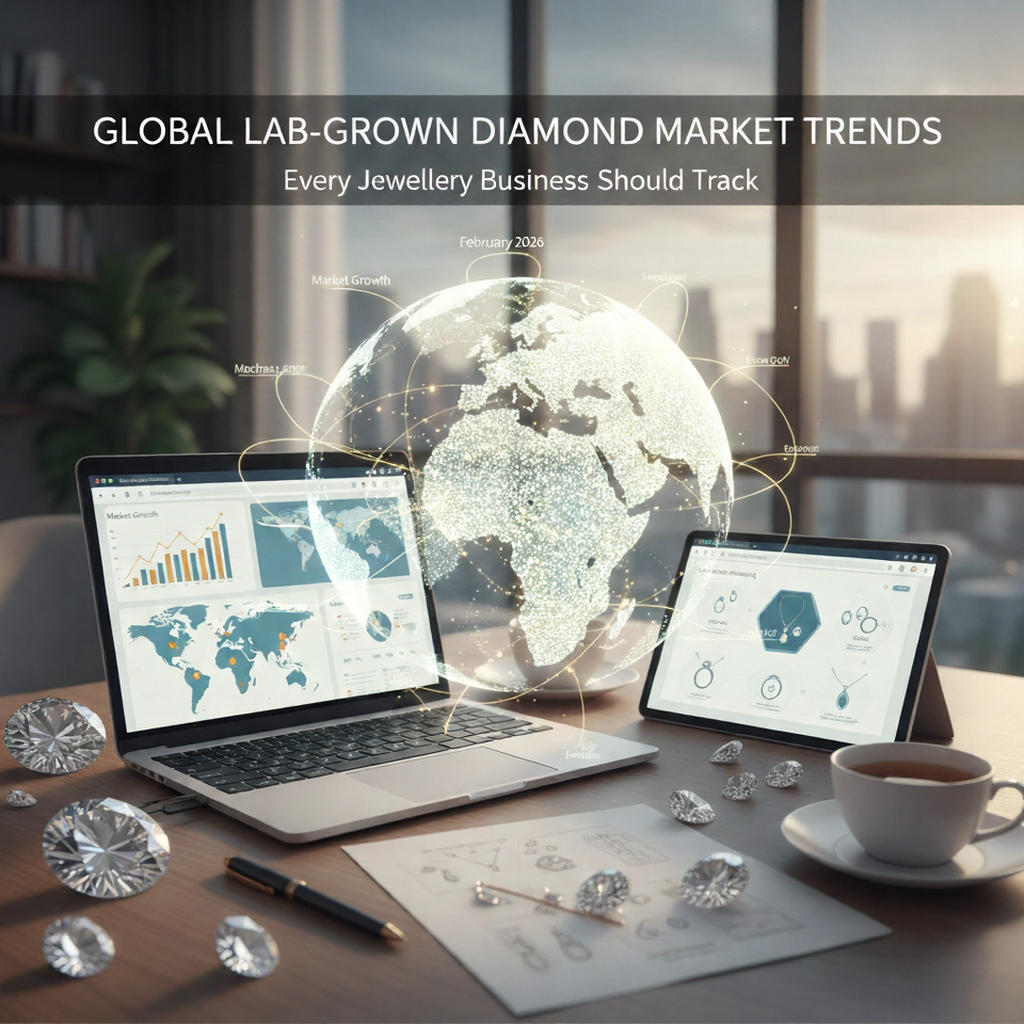
The global jewelry industry is undergoing a major transformation, and the lab-grown diamond is at the center of this shift. Once considered a niche alternative, the lab-grown diamond is now gaining mainstream acceptance among modern consumers. Changing preferences, technological advancements, and evolving definitions of luxury are reshaping how jewelry businesses operate. For brands looking to stay competitive, tracking global trends in lab-grown diamonds has become essential.
Key consumer and retail trends shaping demand
- Younger consumers are driving adoption, especially millennials and Gen Z, who value innovation, ethical sourcing, and price accessibility.
- Price transparency is influencing purchase decisions, as lab-grown diamonds offer similar brilliance at significantly lower price points.
- Every day, diamond jewelry is becoming popular, moving beyond bridal to casual and workwear categories.
- Omnichannel retail is accelerating growth, with customers researching online and purchasing both online and in-store.
- Customization demand is rising, with buyers seeking personalized designs and quick turnaround options.
- Education-led selling is becoming crucial, as informed customers expect clarity on grading, origin, and value.
- Global acceptance is increasing, with markets in the US, India, and Southeast Asia witnessing strong retail expansion.
As awareness grows, global markets are seeing stronger retail visibility and more focused marketing efforts around lab-grown diamonds. Jewelry brands are highlighting transparency, sustainability, and pricing clarity, which resonate strongly with modern buyers. This expanding demand is encouraging businesses to rethink product strategies and diversify offerings.

Pricing Advantage and Strategic Opportunities
The lab-grown diamond segment offers several strategic advantages for jewelry businesses, especially in terms of pricing and accessibility. Compared to mined diamonds, a lab-grown diamond is typically available at a more affordable price point while offering similar visual appeal.
Key opportunities emerging from this trend include:
- Access to new customer segments looking for value-driven purchases
- Greater scope for customised and design-led collections
- Ability to introduce larger carat jewellery at competitive prices
- Expansion into premium segments without significant cost barriers
- Improved margins through efficient sourcing and production
This pricing flexibility enables brands to innovate, experiment, and strengthen their positioning in a highly competitive market.
Sustainability, Technology, and Future Outlook
Sustainability continues to shape the global perception of the lab-grown diamond. Consumers increasingly prefer jewelry that reflects responsible practices and ethical sourcing. Because a lab-grown diamond is produced in controlled environments, it is often positioned as a modern and transparent alternative within the diamond industry.
Technological advancements are further supporting this growth. Improvements in production techniques have enhanced consistency in clarity, color, and cut, allowing the lab-grown diamond to match high-quality standards. As manufacturing processes become more refined, supply chains are expected to become more efficient, further strengthening market adoption.
Final Thoughts
The global rise of the lab-grown diamond is redefining the jewelry landscape. From increasing consumer acceptance and pricing advantages to sustainability and technological innovation, the category continues to gain momentum. For jewelry businesses, adapting to these trends is crucial for long-term growth. The lab-grown diamond is not just an alternative product; it represents a broader shift in how jewelry is designed, marketed, and valued.