
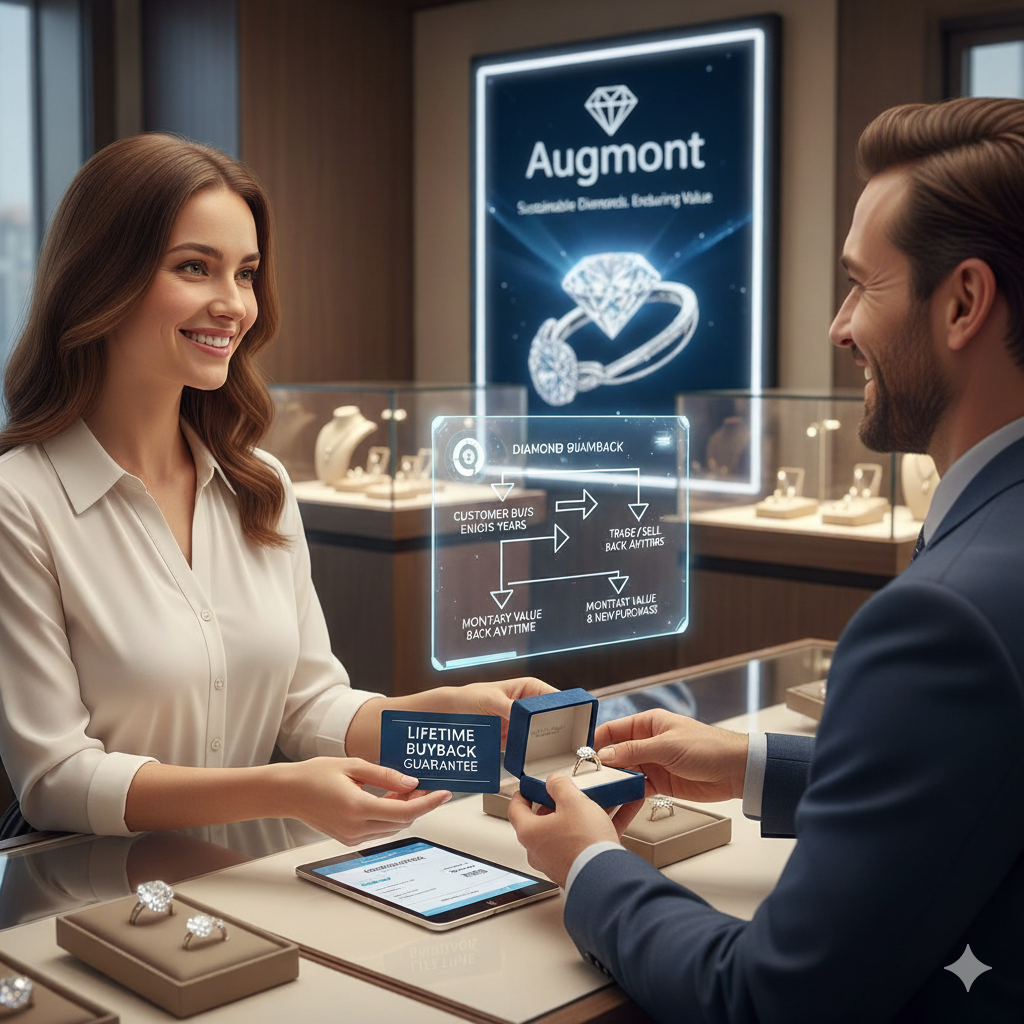
The “lifetime buyback” concept is proving to be a significant solution for diamond retailers, especially when viewed in the context of increasing demand for lab-grown and sustainable diamonds. It calms consumer doubt and redesigns risk management for companies in an evolving world.
What is a Lifetime Buyback Policy?
A life buyback option is a commitment by a shop to buy the jewelry back from the customer at some point in time. The buyback would most likely be part of the original amount paid or the market value of the materials (gold, diamonds, etc.) that went into creating the product. This option gives a sense of security to the purchaser since his or her investment will still have some monetary value.
How It Changes Risk Management for Retailers
1. Minimizes Inventory Risk: Having a buyback provision for customers to return jewelry means that retailers can reduce inventory without having to depend on new production only. This is particularly applicable in the case of cultured diamonds, where the manufacturing process is more controllable and the supply chain is more transparent. A buyback policy can make it possible for a circular economy for the retailer’s offerings, minimizing the risk of inventory that is old or unsold.
2. Fosters Consumer Trust and Loyalty: In an era in which consumers are becoming increasingly more interested in ethical sourcing matters, sustainability, and ultimately what a purchase will be worth, a lifetime buyback policy is a very strong symbol of trust. It tells the consumer that they have faith enough in the value and the quality of their products. This availability and dedication can make the customers more loyal and return to engage in business.
3. Imitates the “Affordable Diamond” Trend: Lab-grown diamonds have lowered the price and increased the accessibility of fine jewelry. Nevertheless, this can create consumer apprehension over a non-mined diamond resale value. A lifetime buyback policy actually becomes a solution to such a concern by establishing a perceivable and believable exit plan for the buyer. It shields the perceived risk of buying a lower-priced but comparatively newer good.
4. Emphasizes Sustainability: Most retailers of lab-grown diamonds market their product as an ethical and sustainable option compared to natural diamonds. A buyback policy reinforces such a message of sustainability by encouraging a circular economy. Rather than the “throwaway” culture, it encourages reuse and recycling of products, reinforcing the green credentials of the brand.
The Role of Lab-Grown and Sustainable Diamonds
The shift towards lab-grown diamonds is a primary reason buyback policies are becoming more essential. Lab-grown diamonds are chemically and physically the same as mined diamonds, but artificially created, and typically this has a reduced carbon impact and does not pose the moral conundrum of conventional mining. With individuals looking for more of these “diamonds of the future,” lifetime buyback policies are a compelling proposition of value. They introduce a genuine value on top of lab-grown diamond’s inherent benefits of price and sustainability by giving the consumers the feeling of long-term value and security.
Final Thoughts
As a whole, lifetime buyback promises are no longer merely a sales technique; they’re an intentional risk management strategy for diamond merchants, a confidence enhancer, and a solution to changing values among contemporary consumers who value sustainability, transparency, and affordability.