
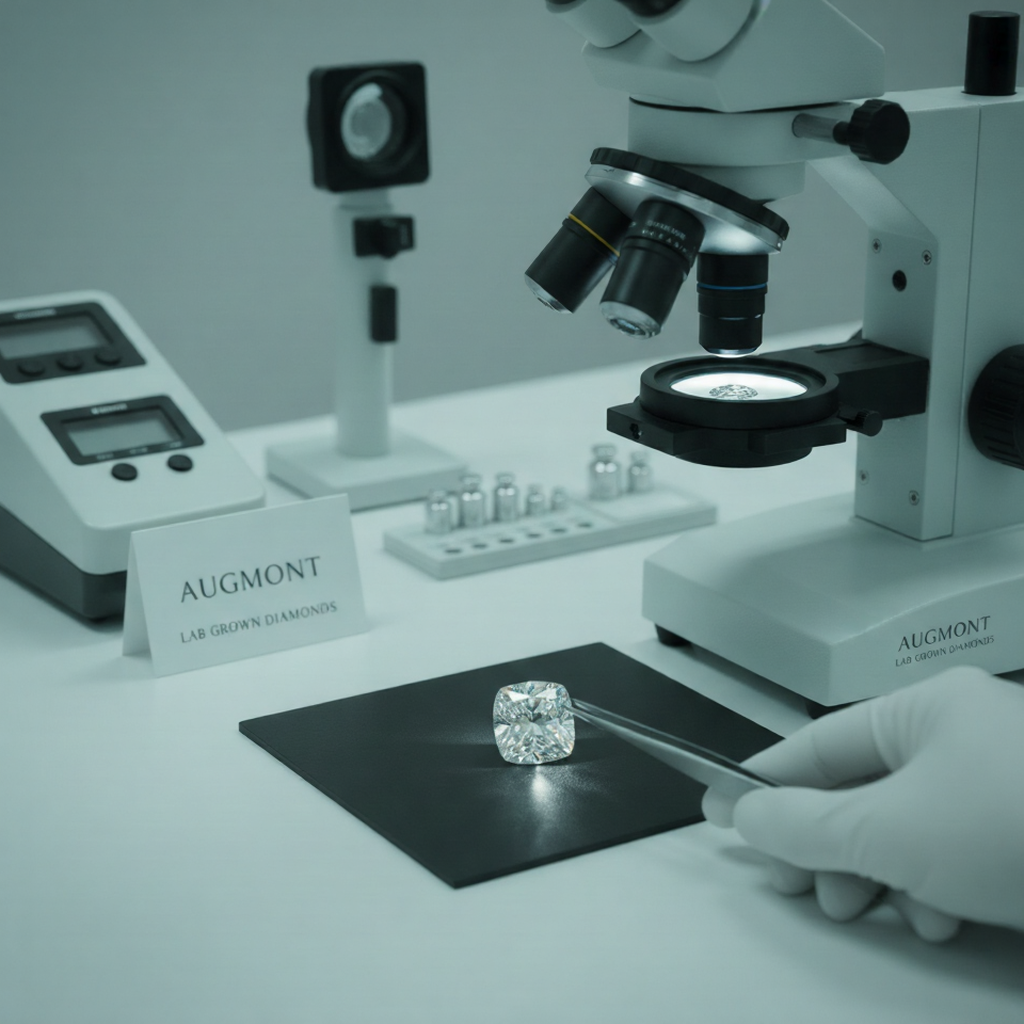
The growing acceptance of lab-grown diamonds in India has reshaped how B2B buyers source, evaluate, and scale diamond supply. Lab-created diamonds are now an essential product for jewelery brands, exporters, and wholesalers, driven by technological advancements and growing consumer demand for ethical substitutes. But as the market grows, quality control becomes the key differentiator between dependable and inconsistent suppliers. To find the best lab-grown diamonds and preserve long-term brand credibility, B2B buyers must be aware of quality benchmarks.
Quality control begins at the diamond creation stage. Even slight changes during growth can affect the clarity, color, or structural integrity of lab-grown diamonds, which are made using extremely regulated scientific procedures.
Buyers need to evaluate whether producers document every production cycle, maintain stable environments, and adhere to standardized growth protocols. Because uniformity across batches directly affects pricing and inventory planning, this level of traceability is particularly crucial for companies that handle large volumes.

Precision in Production and Post-Growth Processing
The final brilliance and symmetry of a diamond are determined by cutting and polishing after growth is finished. It is crucial for B2B purchasers looking for the best location to purchase diamonds to assess the post-growth processing technology and level of expertise. Strict internal inspections, expert craftsmanship, and sophisticated laser cutting guarantee that diamonds adhere to uniform structural and visual standards. Even with well-grown stones, poor finishing can lower overall value and cause problems when making jewelry.
At this point, consistency testing is just as crucial. B2B purchasers should assess entire batches rather than just individual samples. Randomized checks help in verifying dimensional accuracy, clarity, distribution, and color uniformity. When diamonds enter the design and setting stage, this lowers the possibility of production delays, rejections, or mismatched collections.
Certification and Compliance as Quality Benchmarks
One of the most trustworthy measures of diamond quality is still third-party certification. Reputable gemological laboratories provide transparency and impartial validation by grading lab-made diamonds according to internationally recognized standards. Certification guarantees compliance with international trade regulations, streamlines resale, and builds trust with downstream partners for B2B buyers. Additionally, it guards against inaccurate grading claims, which can harm a brand’s reputation and relationships.
Beyond certification, ethical compliance plays a growing role in quality perception. Buyers increasingly expect suppliers to follow responsible sourcing practices, use transparent energy policies, and maintain fair labor standards. In a competitive global market, ethical credibility enhances the overall value proposition of lab-grown diamonds in India.

Choosing Partners Who Prioritize Long-Term Quality
Sustained quality control depends on strong supplier relationships. The best lab-grown diamonds come from manufacturers who view quality as an ongoing commitment rather than a one-time checklist. Regular audits, open communication, and performance reviews help align expectations and reduce inconsistencies over time. For B2B buyers, partnering with transparent and quality-driven suppliers ensures smoother operations, predictable inventory, and scalable growth.
Final Thoughts
In a market defined by innovation and trust, quality control is the foundation of success. By focusing on production precision, certification standards, and long-term partnerships, B2B buyers can confidently build reliable supply chains and deliver consistent value to their customers.