
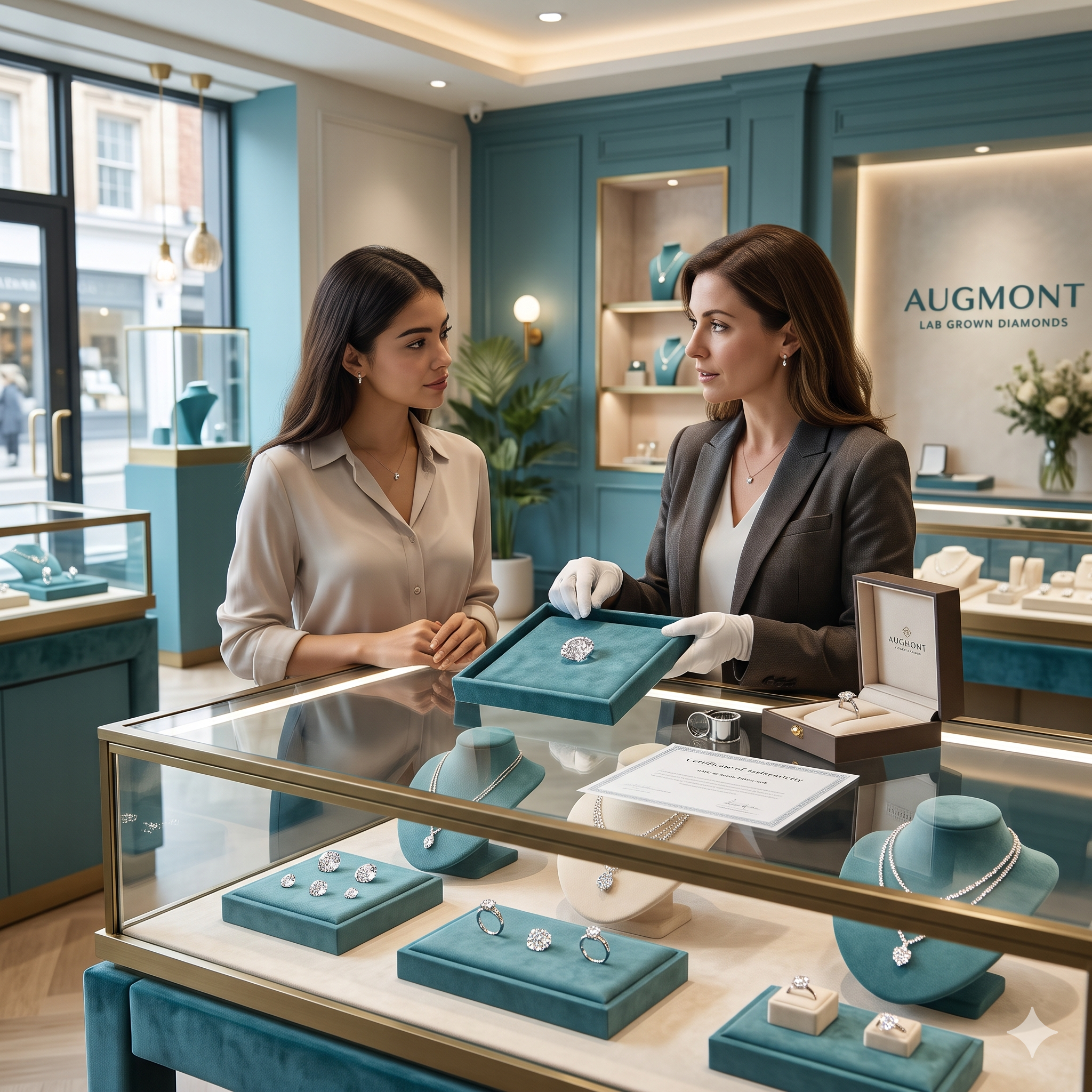
The diamond industry is evolving as consumer preferences and jewelry trends continue to change. Lab-grown diamonds have emerged as an important category, offering retailers new opportunities to expand their product portfolios and cater to customers with different budgets and preferences.
For jewelry retailers, understanding lab-grown diamonds involves more than knowing how they are manufactured. Product quality, pricing, sourcing, and customer education are equally important for building a successful offering.
What are Lab-Grown Diamonds?
Lab-grown diamonds are created in controlled laboratory environments using advanced technologies. They have essentially the same chemical composition, crystal structure, and physical properties as naturally mined diamonds.
Two common manufacturing methods are High-Pressure, High-Temperature (HPHT) and Chemical Vapor Deposition (CVD). Both produce diamonds, although the processes differ.

Lab-grown diamonds are formed from diamond simulants such as cubic zirconia and moissanite, which have similar material properties. Retailers should communicate these distinctions clearly to help customers make informed purchasing decisions.
Why Should Retailers Consider Lab-Grown Diamonds?
- Expanding Customer Preferences: Customers increasingly explore different diamond options based on their budgets, design preferences, and purchasing priorities. Adding lab-grown diamonds can help retailers cater to a wider audience, from engagement ring shoppers to customers looking for everyday jewelry.
- Opportunities Across Price Points: Lab-grown diamonds generally cost less than comparable natural diamonds, although prices vary according to carat weight, cut, color, clarity, and market conditions. This can allow retailers to offer more options across different price segments.
- Greater Design Flexibility: Retailers can explore lab-grown diamond collections featuring solitaire rings, statement jewelry, pendants, earrings, and personalized designs. A diverse assortment can help attract customers shopping for different occasions.
How Can Retailers Evaluate Lab-Grown Diamonds?
Retailers should assess the four Cs before sourcing diamonds.
- Cut: Influences brilliance and light reflection.
- Color: Indicates the degree of colorlessness.
- Clarity: Refers to internal inclusions and external blemishes.
- Carat: Measures the diamond’s weight.
These characteristics should be evaluated together to determine a diamond’s quality. Retailers should also review grading reports from recognized gemmological laboratories and establish consistent supplier standards.

How Can Retailers Build a Successful Lab-Grown Diamond Collection?
- Educate Customers: Customers may have questions about diamond origins, quality, and pricing. Trained sales teams can explain the differences between laboratory-grown and natural diamonds without confusing or misleading buyers.
- Prioritize Transparency: Product descriptions should clearly identify lab-grown diamonds and provide accurate information about grading, specifications, and pricing. Transparent communication helps build customer confidence.
- Focus on Quality and Value: Customers searching for the best lab-grown diamonds often need clear information about craftsmanship, grading, and design. Retailers should prioritize reliable sourcing and consistent quality rather than focusing exclusively on carat size or price.
Final Thoughts
Lab-grown diamonds offer retailers an opportunity to respond to changing customer preferences and expand their jewelry collections. By focusing on quality assessment, competitive pricing, transparent communication, and customer education, retailers can approach this growing category strategically. Understanding customer expectations and maintaining reliable sourcing practices can help jewelry businesses develop collections that align with their target market and long-term retail objectives.