
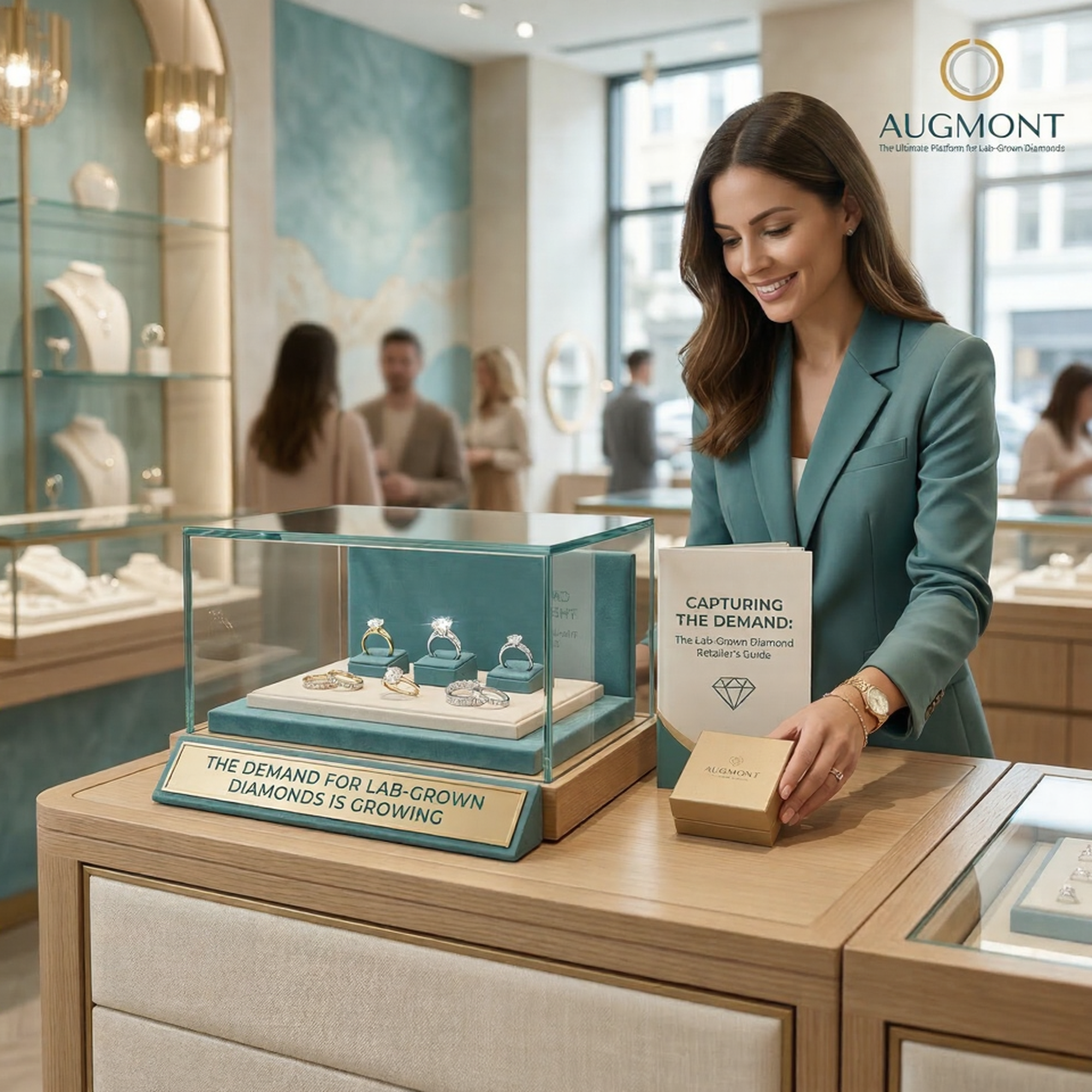
The jewelry market is in a state of evolution, and consumer behavior is shifting towards innovative, eco-friendly, and cost-effective products. In the given scenario, lab-grown diamonds have become an emerging and growing market that is revolutionizing how consumers think about diamond jewelry.
Lab-grown diamonds have similar brilliance, hardness, and chemical composition to traditional diamonds, but they are produced in a controlled environment with advanced technology. As more consumers become familiar with these products and younger consumers join the market, the popularity of lab-grown diamonds is steadily increasing.
And this rise of lab-grown diamonds has provided retail jewelers with an opportunity to not only increase their customer base but also strengthen their competitive advantage in the industry.
So, in this blog, we will discuss how retail jewelers can capitalize on the growing popularity of lab-grown diamonds.
Understanding the Opportunity in Lab-Grown Diamonds
Lab-grown diamonds are no longer a niche product. The quality of lab-grown diamonds is improving with technological advancements, making it more affordable. The new generation of consumers, like millennials and Gen Z, are more willing to consider alternative luxury products that are affordable and have a better social cause. The cost advantage of lab-grown diamonds enables customers to buy bigger diamonds or more intricate designs within their budget. This is a great opportunity for retail jewelers to sell lab-grown diamonds as a smart and stylish product rather than a cheaper alternative.
Key Strategies for Retail Jewellers
There are some useful steps that retail jewelers can take to leverage this new market segment:
Aware: It’s very important to learn about lab-grown diamonds. A lot of people don’t know how lab-grown diamonds are made or how they compare to natural diamonds. Teaching people that lab-grown diamonds are chemically and physically the same as natural diamonds can help them feel more confident and less hesitant to buy them.
Category: Making a product category for lab-grown diamonds can help people see them more in stores and online. This can help customers look at lab-grown diamonds without getting confused.
Modern Design: Making modern designs just for lab-grown diamonds can help draw in younger customers who want modern looks and styles that are different from the rest.
Polish Team: Training sales teams to confidently explain the benefits and differences between natural and lab-grown diamonds can significantly improve customer engagement and conversion rates.
 Expanding Retail Opportunities with Lab-Grown Diamonds
Retail jewelers can also benefit from lab-grown diamonds by using them to increase the range and flexibility in the products they offer. Since lab-grown diamonds are priced at a lower premium, retailers may use them to offer aspirational products that appeal to a wider customer base.
Another area where lab-grown diamonds may help retailers is by enabling them to experiment with bold, statement, and contemporary designs, which may not be feasible with natural diamonds due to cost.
Final Thoughts
The rise of lab-grown diamonds reflects a broader transformation within the jewelry industry. Consumers today are more informed, value-conscious, and open to innovative products that align with their lifestyle and beliefs. For retail jewelers, adapting to this shift is not simply about adding a new product category but about understanding changing consumer expectations. By embracing lab-grown diamonds with the right strategy, education, and design approach, retail jewelers can unlock new growth opportunities while staying relevant in a rapidly evolving market.