
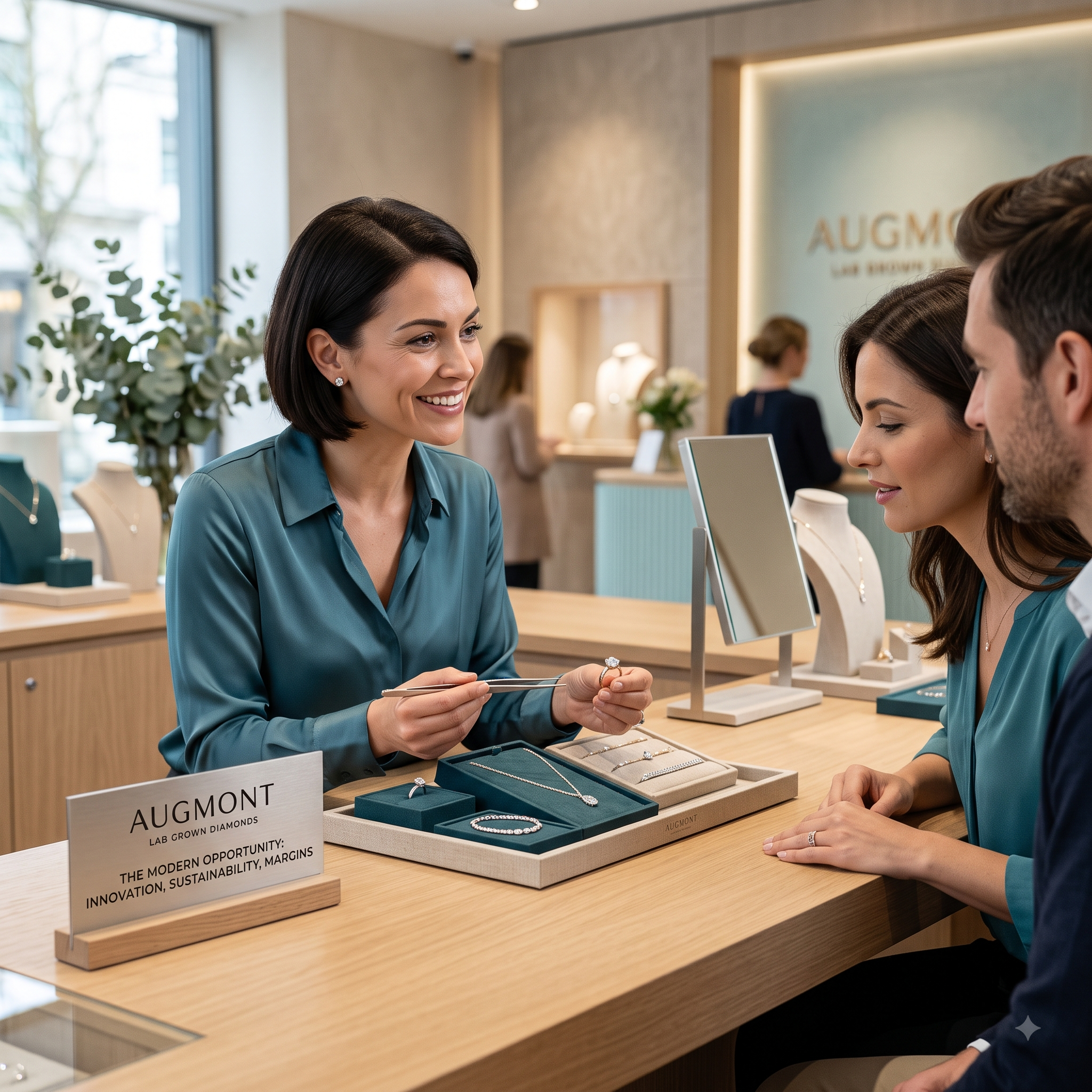
The jewelry industry is evolving, and lab-grown diamonds are becoming an increasingly important part of that transformation. As consumer preferences shift and technology continues to advance, jewelry retailers have an opportunity to expand their product offerings and cater to a broader audience. Once considered a niche category, lab-grown diamonds are now gaining mainstream acceptance, making them a valuable addition to any jewelry business.
Here’s why lab-grown diamonds present a significant opportunity for jewelry retailers.
- Growing Consumer Demand: Today’s consumers are more informed than ever before. They actively research products, compare options, and look for value before making a purchase. As awareness of lab-grown diamonds grows, more customers are considering them alongside natural diamonds. Retailers who offer both options can appeal to a wider customer base and provide shoppers with greater flexibility based on their preferences, budget, and lifestyle.
- Expanding Customer Segments: One of the biggest advantages of adding lab-grown diamonds to your inventory is the ability to attract new customer segments. Younger buyers, first-time jewelry purchasers, and customers looking for larger diamonds at accessible price points are increasingly exploring lab-grown options. Offering these products allows retailers to engage customers who may not have otherwise considered purchasing diamond jewelry. By expanding product choices, retailers can serve a wider range of buyers without replacing their existing natural diamond offerings.
- Higher Inventory Flexibility: Lab-grown diamonds offer retailers greater flexibility when it comes to inventory planning. They are available in a wide range of sizes, cuts, colors, and clarity grades, making it easier to meet diverse customer preferences. This flexibility enables retailers to create collections that appeal to different occasions, including engagement rings, bridal jewelry, fashion jewelry, anniversary gifts, and everyday wear. A broader product portfolio also helps retailers respond more effectively to changing market trends.
- Increased Sales Opportunities: Adding lab-grown diamonds doesn’t necessarily replace natural diamond sales, it creates additional revenue opportunities. Retailers can introduce new collections, upsell customers to larger stones within their budget, and offer more customization options. Customers who initially visit the store for one product may also explore complementary pieces, increasing overall sales potential. Offering multiple diamond categories helps retailers position themselves as trusted advisors rather than sellers of a single product.
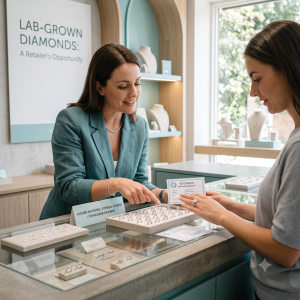
- Stronger Competitive Position: As the jewelry market becomes more competitive, retailers need to adapt to changing consumer expectations. Businesses that embrace innovation are often better positioned to capture emerging opportunities. By including lab-grown diamonds in their product range, retailers demonstrate their ability to evolve with market trends while providing customers with more choices. This can strengthen brand perception and help differentiate the business from competitors.
Final Thoughts
The rise of lab-grown diamonds presents a valuable opportunity for jewelry retailers to diversify their offerings, attract new customers, and strengthen their competitive position. By embracing this growing category, retailers can expand their reach while continuing to meet the evolving needs of today’s jewelry buyers. Success lies in offering quality products, educating customers, and providing a transparent buying experience. Retailers who adapt to changing market trends and invest in innovation will be well-positioned to grow their business in the years ahead.