
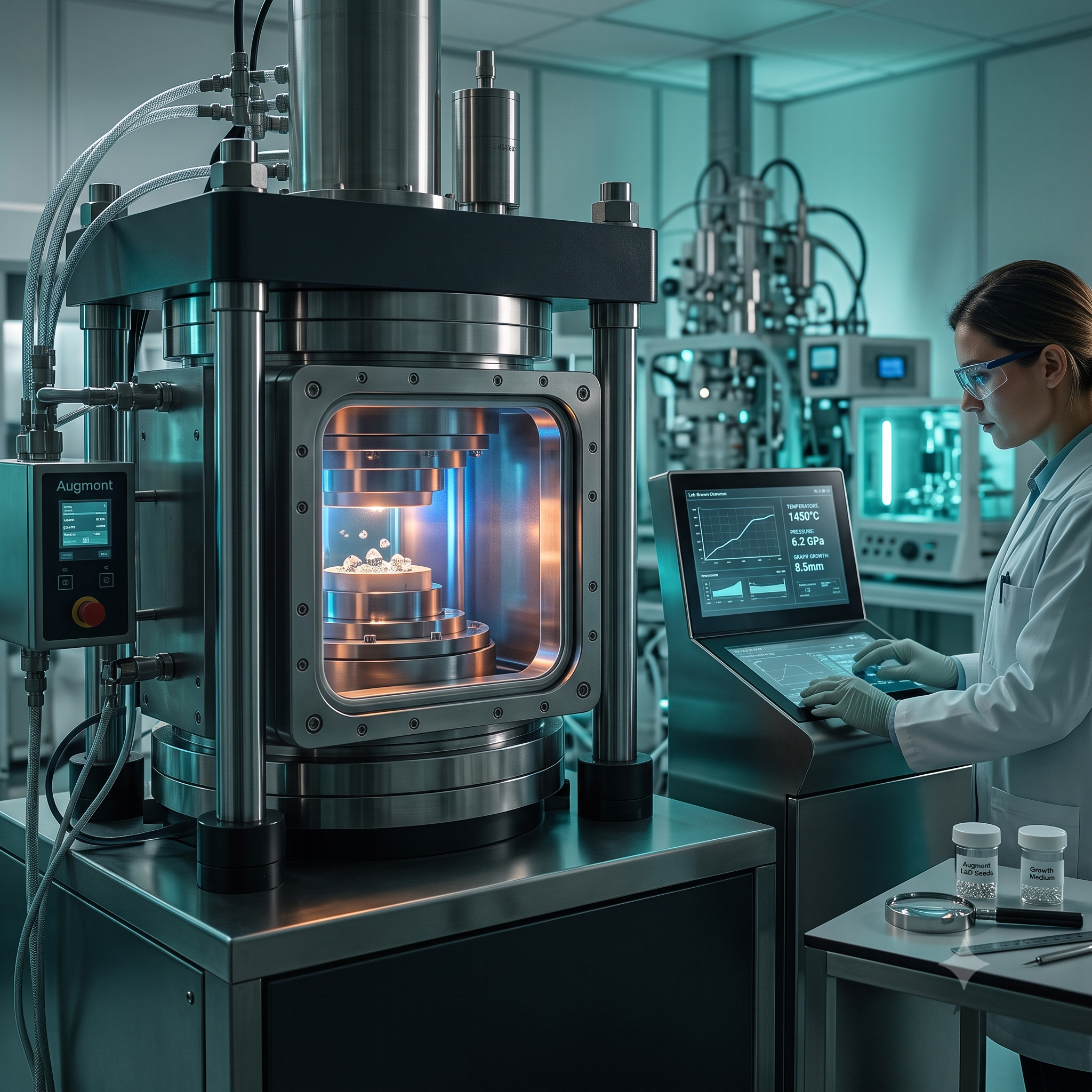
The diamond industry has been undergoing a remarkable transformation due to the development of new technologies for diamond manufacturing. Natural diamonds take several billion years to form beneath Earth’s crust; however, technology makes it possible to simulate diamond formation under controlled conditions. Lab-created diamonds are setting the pace in diamond manufacture through precision and craftsmanship.
Lab-Grown Diamonds: The Innovation
Every diamond begins with a small diamond seed that serves as the foundation for growth. Using advanced engineering, manufacturers recreate the conditions under which natural diamonds are formed, allowing carbon atoms to bond and gradually develop into a rough diamond. Within a few weeks, the crystal reaches the desired size and is ready for cutting and polishing.
The industry primarily relies on two proven production methods:
- High Pressure High Temperature (HPHT): This technique recreates the extreme pressure and heat found deep within the Earth, enabling carbon to crystallize into a diamond.
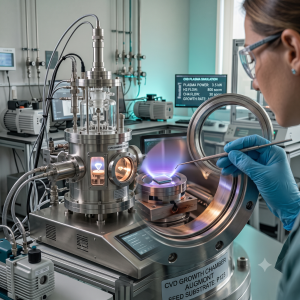
- Chemical Vapor Deposition (CVD): This process uses carbon-rich gases inside a controlled chamber, where carbon atoms gradually settle on a diamond seed to form a crystal layer by layer.
Both techniques produce diamonds with the same physical, chemical, and optical characteristics as their naturally formed counterparts.
Innovation Beyond the Growth Process
The true breakthrough here is not just about developing lab-grown diamonds but also about the technology involved in all the processes of diamond making. This is possible because of the modern manufacturing facilities, which make use of automation, real-time monitoring technology, and engineering precision to maintain optimum growth conditions. After making the rough diamond, the use of computer-aided laser mapping and cutting helps in getting maximum yields while maintaining symmetry and clarity.
Driving Efficiency and Consistency
Through innovation, it has been possible for companies to have increased control over the manufacturing process to provide consistent quality and scalability. Through standardized manufacturing processes, the manufacture of high-quality diamonds is made available on an increasingly large scale to consumers as well as jewelry brands. The constant research and development in processes have also helped increase efficiency, reduce production time, and make effective use of resources.
Final Thoughts
With technology advancing rapidly, lab-grown diamonds are increasingly becoming a vital component of the global jewelry ecosystem. Innovations in the last few decades have improved the production process by increasing the quality and allowing many jewelers more room for creativity. Technology-based manufacture makes it easier than ever to get diamonds as consumer tastes change. It’s the mix of innovation, engineering and artistry that’s helping to create the future of fine jewelry.