
Introduction
The global demand for lab-grown diamonds has been rising steadily as consumers increasingly seek diamonds that combine quality, affordability, and responsible sourcing. This growing demand has encouraged manufacturers to expand their production capacity to serve both domestic and international markets. However, scaling production is not simply about increasing output. It requires maintaining consistent quality, precision, and craftsmanship across every diamond produced.
To achieve sustainable growth, manufacturers must focus on technology, operational efficiency, quality assurance, and continuous innovation.
Here are the key strategies that can help lab-grown diamond manufacturers scale production without compromising quality.
-
- Invest in Advanced Manufacturing Technology: The foundation of high-quality lab-grown diamonds lies in the manufacturing process. Technologies such as Chemical Vapor Deposition (CVD) and High Pressure High Temperature (HPHT) require precise control over growth conditions to produce diamonds with consistent characteristics. Modern equipment equipped with automation and real-time monitoring enables manufacturers to improve production efficiency while maintaining uniform quality across larger production volumes.
- Standardize Production Processes: As manufacturing operations grow, maintaining consistency becomes increasingly important. Standard operating procedures help ensure that every production batch follows the same process, reducing variability and improving efficiency. A standardized production system also minimizes human error and helps maintain uniform quality regardless of production scale.
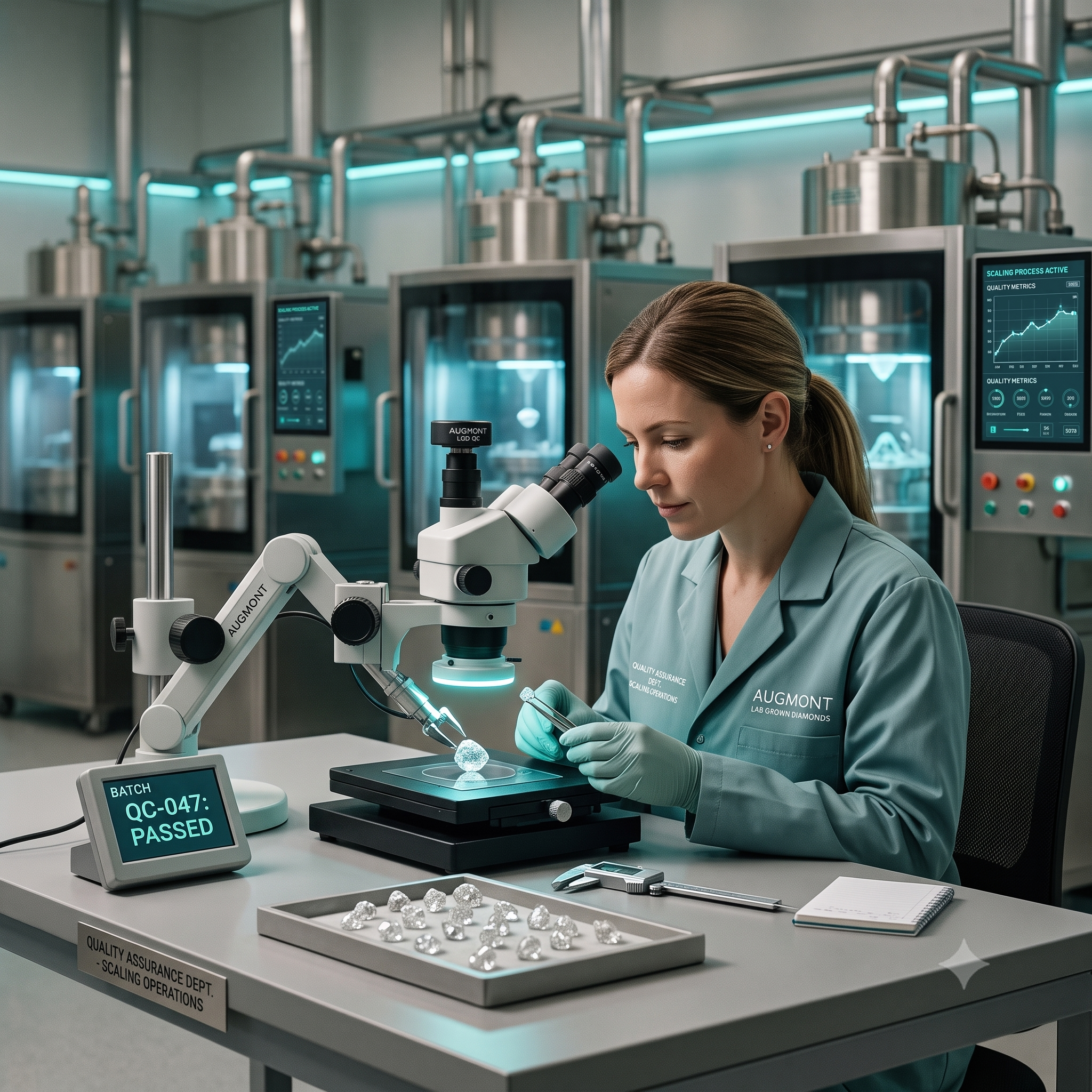
- Strengthen Quality Control at Every Stage: Quality should be monitored throughout the manufacturing process rather than only during the final inspection. Regular quality checks during crystal growth, cutting, polishing, and grading help identify issues early and reduce production losses. A comprehensive quality control framework ensures that every diamond meets predefined standards before reaching customers.

- Develop a Skilled Workforce: While automation has improved manufacturing efficiency, skilled professionals remain essential for operating advanced equipment and maintaining production standards. Engineers, technicians, gemologists, and quality specialists all contribute to ensuring product consistency. Regular training programs help employees stay updated with evolving technologies and industry best practices.
- Use Data and Automation for Better Decision Making: Data analytics and artificial intelligence have become valuable tools for improving manufacturing performance. By analyzing production data, manufacturers can identify process inefficiencies, predict maintenance requirements, and optimize resource utilization. This enables higher productivity while maintaining strict quality standards.
- Build a Reliable Supply Chain: Scaling production requires uninterrupted access to high-quality raw materials, equipment, and consumables. Establishing strong supplier relationships and implementing efficient inventory management practices help reduce operational disruptions and ensure consistent manufacturing quality. A resilient supply chain also enables manufacturers to respond effectively to changing market demand.
Final Thoughts
Manufacturers that invest in advanced technology, skilled talent, robust quality control, and efficient production systems will be well positioned to meet growing global demand while delivering diamonds that consistently meet customer expectations. In an increasingly competitive industry, maintaining quality alongside growth will remain a key differentiator for long-term success.