
Introduction
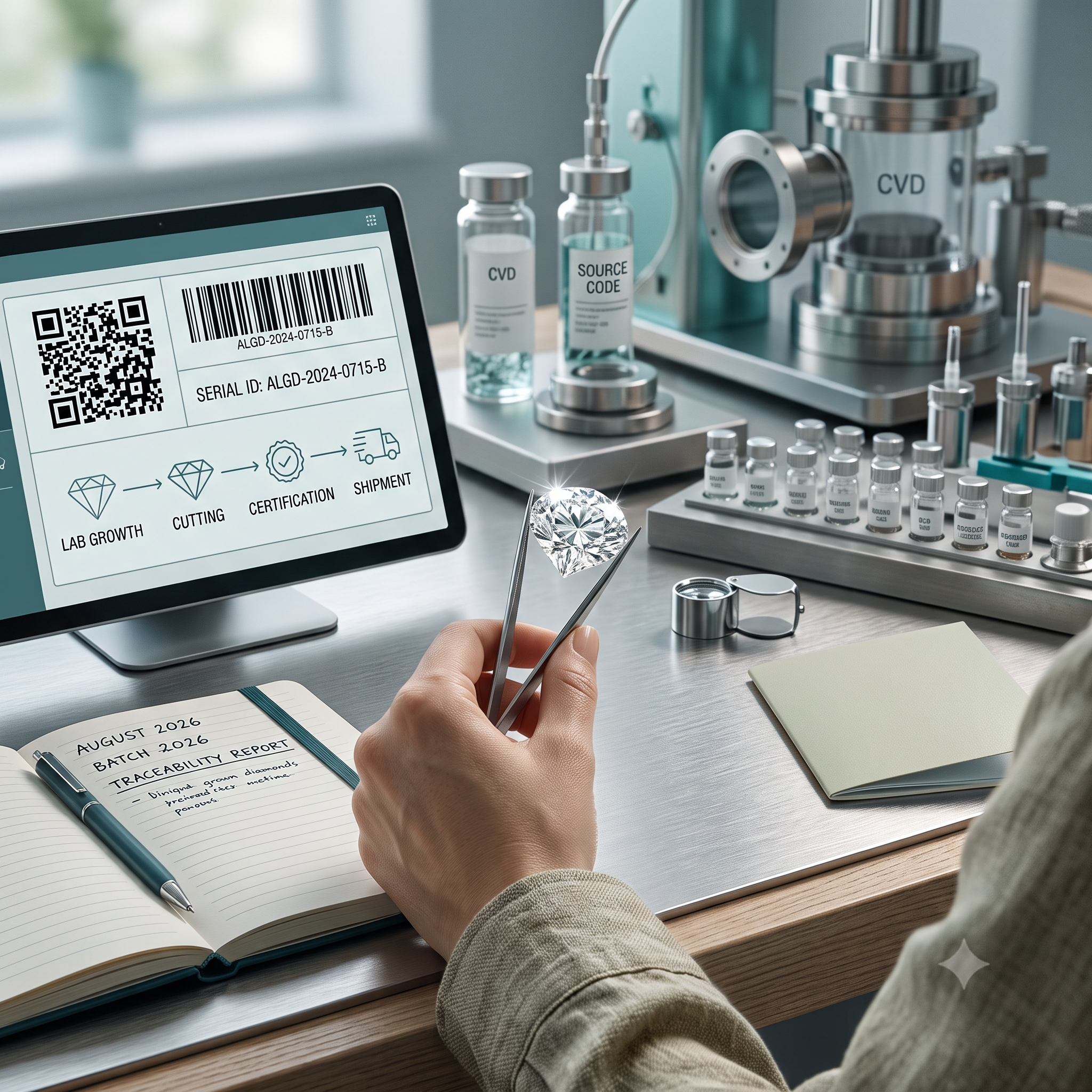
As the lab-grown diamond industry continues to expand, buyers are becoming more interested in understanding where their diamonds come from, how they are produced, and whether the information provided about them can be verified. For manufacturers, this has made traceability an increasingly important part of the production process. Traceability provides greater visibility across the diamond’s journey, from its creation and grading to its movement through the supply chain. It can help manufacturers strengthen transparency, build trust with retailers, and meet the growing expectations of a more informed global market.
What This Blog Is About
Traceability is becoming an important differentiator for lab-grown diamond manufacturers as the industry matures. This blog explores why maintaining clear and verifiable information about a diamond’s journey matters and how it can support greater trust, accountability, and efficiency across the diamond supply chain.
Why Traceability Matters for Manufacturers
- It Builds Greater Transparency: Traceability allows manufacturers to maintain a clear record of important information associated with a diamond. This can include details related to production, grading, processing, and movement through the supply chain. Greater visibility helps businesses provide retailers and buyers with more confidence in the information attached to each stone.
- It Strengthens Trust With Retailers: Diamond retailers need reliable information when sourcing products for their customers. Manufacturers that can provide consistent documentation and verifiable product details can make it easier for retailers to communicate with confidence. Over time, this transparency can contribute to stronger and more credible business relationships.
- It Supports Product Authentication: As the lab-grown diamond market expands, distinguishing and documenting individual stones becomes increasingly important. Technologies such as laser inscriptions and digital records can help associate a diamond with its grading information and production details. This provides an additional layer of identification throughout its journey.
- It Improves Supply Chain Management: Traceability is not only about communicating information to customers. It can also help manufacturers manage their own operations more effectively. Maintaining detailed records can improve inventory management, reduce documentation gaps, and make it easier to track diamonds as they move between different stages of production and distribution.
- It Helps Meet Changing Market Expectations: Consumers today increasingly want more information about the products they purchase. In the diamond industry, this includes questions around origin, production processes, quality, and certification. Manufacturers that invest in transparent systems can be better positioned to respond to these expectations as the market becomes more information-driven.

Final Thoughts
Traceability is becoming more than a documentation exercise for lab-grown diamond manufacturers. It is an important part of building transparency, strengthening business relationships, improving operational control, and creating greater confidence in the product. As the industry continues to evolve, manufacturers that establish reliable traceability systems can differentiate themselves through greater accountability and information transparency. For an industry built around technology and innovation, maintaining a clear and verifiable journey for every diamond can be an important step toward building lasting trust.