
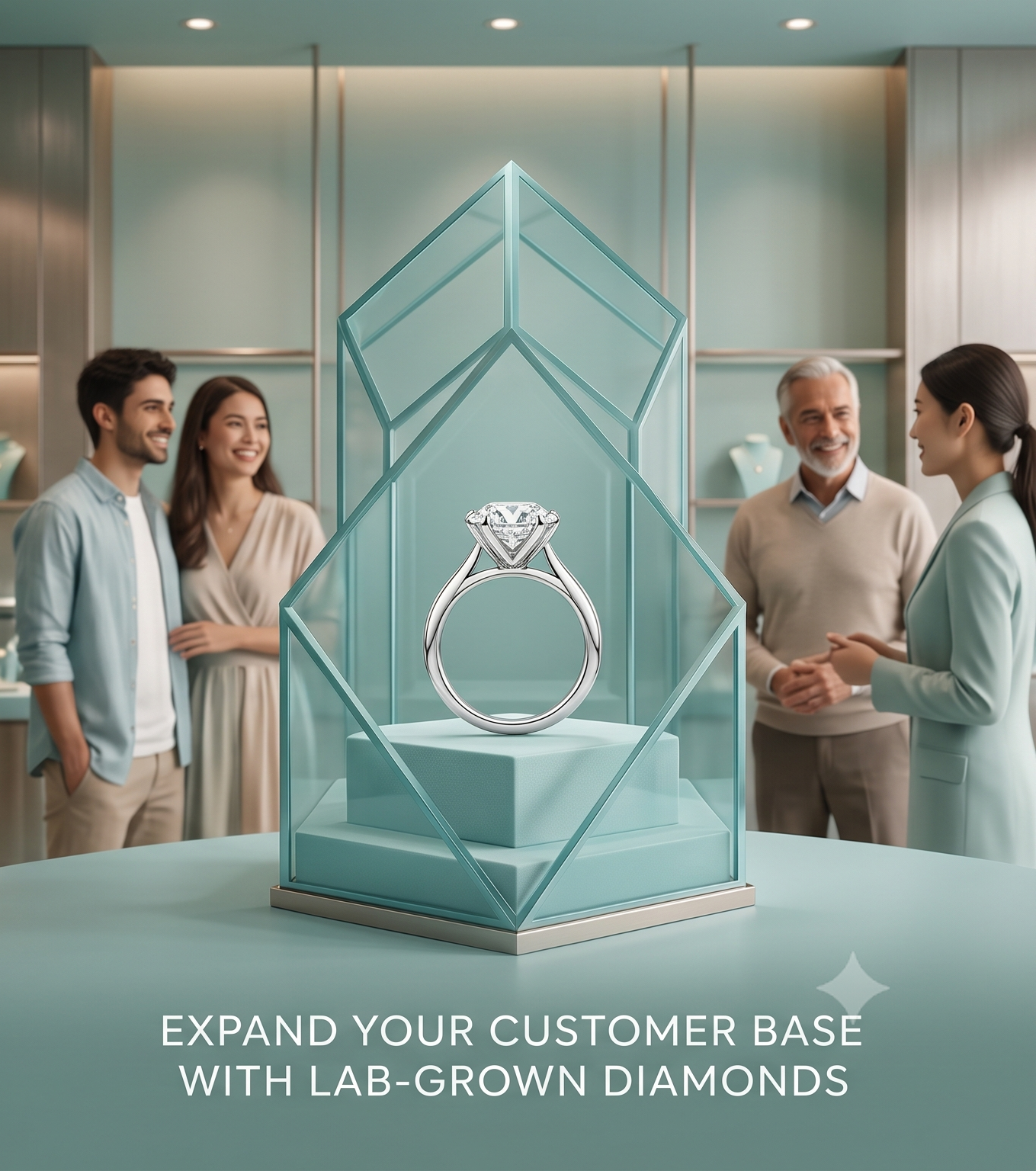
The jewelry industry is evolving, and consumer preferences are changing faster than ever. Today’s buyers are looking for products that offer value, quality, transparency, and personalization. This shift has created a significant opportunity for retailers to expand their customer base by incorporating lab-grown diamonds into their offerings.
Lab-grown diamonds are chemically, physically, and optically identical to mined diamonds. The key difference lies in their origin. Created in advanced laboratories using cutting-edge technology, these diamonds provide consumers with the same brilliance and durability while offering greater flexibility in terms of price and design.
How to reach an extensive customer base? Let’s have a look.
- Reaching a New Generation of Consumers: Millennials and Gen Z consumers are becoming increasingly influential in the jewelry market. These buyers tend to research products extensively before making a purchase and often prioritize affordability, innovation, and transparency. Lab-grown diamonds align well with these expectations. Their accessible price points allow younger consumers to purchase larger or higher-quality diamonds without stretching their budgets. By offering lab-grown options, retailers can attract first-time diamond buyers who may otherwise delay or avoid purchasing diamond jewelry altogether.
- Expanding the Affordable Luxury Segment: One of the biggest advantages of lab-grown diamonds is their ability to make luxury more attainable. Customers who previously considered diamond jewelry beyond their reach can now access premium-looking pieces at a more comfortable price point. This creates opportunities for retailers to target a broader audience, including young professionals, newly engaged couples, and gift buyers seeking exceptional value. Rather than replacing existing customers, lab-grown diamonds often bring entirely new customer segments into the store.
- Encouraging Larger Purchases: With the cost savings associated with lab-grown diamonds, customers can often choose larger carat sizes or more elaborate designs within the same budget. For retailers, this can translate into higher-value transactions and increased customer satisfaction. Buyers feel they are getting more for their money, while retailers can showcase a wider range of designs that appeal to different budgets and preferences.
- Supporting Customization Trends: Personalized jewelry continues to gain popularity worldwide. Consumers increasingly want pieces that reflect their individual style, milestones, and stories. Because lab-grown diamonds offer greater pricing flexibility, customers are often more willing to invest in customized settings and unique designs. Retailers can use this trend to differentiate themselves from competitors while creating stronger customer relationships through personalized experiences.
- Strengthening Customer Loyalty: By offering both mined and lab-grown diamonds, retailers demonstrate that a retailer understands diverse customer needs. Rather than presenting a one-size-fits-all approach, retailers can provide options that suit different preferences and budgets. This consultative selling approach helps build trust and positions the retailer as a customer-focused destination. When buyers feel they have choices, they are more likely to return for future purchases and recommend the retailer to others.
Final Thought
As consumer expectations continue to evolve, retailers must adapt to remain competitive. Lab-grown diamonds are not just a product category; they are a powerful tool for customer acquisition and business growth. By attracting younger buyers, expanding the affordable luxury market, supporting customization, and increasing purchase opportunities, lab-grown diamonds can help retailers reach new audiences and strengthen long-term customer relationships.