

The lab-grown diamond industry has been creating new opportunities for manufacturers, wholesalers, and retailers. As consumer acceptance continues to grow, businesses are increasingly focused on a critical factor that drives long-term success: margins. While demand for the best lab-grown diamonds continues to increase across global markets, maintaining healthy profitability requires a clear understanding of pricing, production costs, inventory management, and value creation. For manufacturers and retailers alike, sustainable margins are essential for scaling operations and remaining competitive.
What This Blog Covers
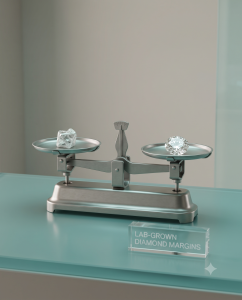
This blog explores the key factors that influence margins in the lab-grown diamond business and how industry stakeholders can position themselves for profitable growth.
Key Factors Affecting Margins
-
- Production Efficiency Matters: For manufacturers, production costs play a significant role in determining margins. Factors such as energy consumption, equipment utilization, yield rates, and production technology directly impact the cost of creating diamonds. As technology advances, production becomes more efficient, allowing manufacturers to improve output while controlling expenses. Businesses that optimize their operations are often better positioned to offer the best man-made diamonds while maintaining profitability.
- Quality Creates Pricing Power: Not all lab-grown diamonds command the same value. Characteristics such as cut, color, clarity, and carat weight continue to influence pricing just as they do in natural diamonds. Manufacturers that consistently produce high-quality stones can achieve stronger margins because retailers and consumers are willing to pay a premium for superior products. The ability to deliver the best manufactured diamonds often depends on maintaining strict quality standards throughout the production process.
- Branding and Consumer Education: Retailers have a unique opportunity to influence margins through branding and customer engagement. While product quality remains important, consumers increasingly seek transparency, trust, and education before making a purchase. Businesses that effectively communicate the value proposition of lab-grown diamonds can differentiate themselves in a competitive marketplace. Strong branding often allows retailers to maintain healthier margins than businesses competing solely on price.
- Inventory Management and Demand Forecasting: Inventory can significantly impact profitability. Overstocking ties up capital, while understocking may result in missed sales opportunities. Manufacturers and retailers that leverage data-driven demand forecasting can better align production and inventory levels with market demand. Efficient inventory management reduces carrying costs and helps protect margins, particularly in a market where pricing dynamics continue to evolve.
- Product Diversification: Many successful businesses are expanding beyond loose diamonds into finished jewelry, custom designs, and premium collections. Offering a broader range of products creates additional revenue streams and may improve overall profitability. Retailers showcasing the best lab-grown diamonds within unique jewelry collections can often capture greater value than selling stones alone. Diversification also helps businesses respond to changing consumer preferences more effectively.

Final Thoughts
Margins in the lab-grown diamond business are influenced by far more than production costs alone. Quality, operational efficiency, inventory management, branding, and product positioning all contribute to long-term profitability. As the market for the best lab-grown diamonds continues to expand, manufacturers and retailers that focus on value creation rather than price competition will be better equipped to sustain growth.