
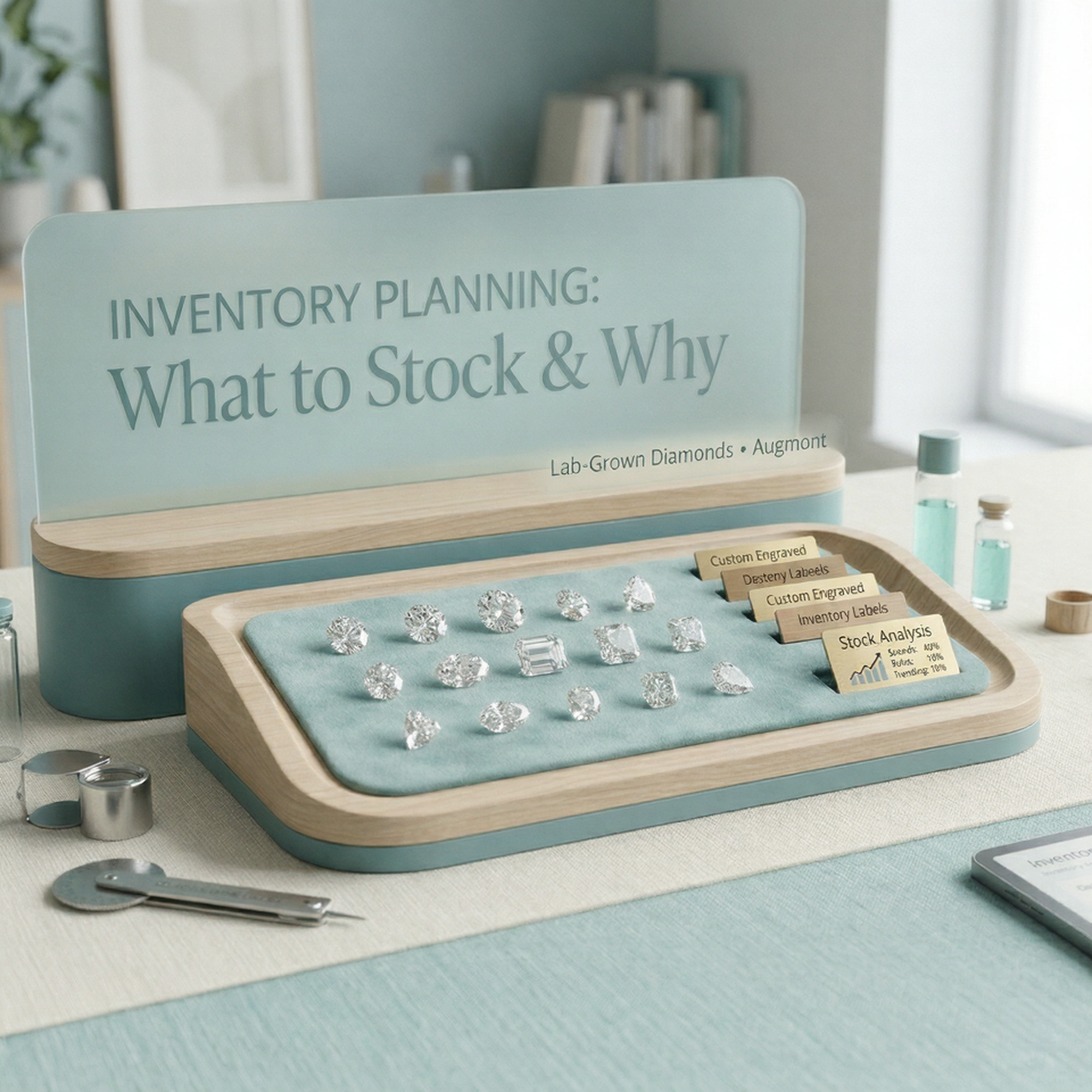
The inception of lab-grown diamonds has transformed the demand of luxurious stones not just for consumers but also for retailers, wholesalers, and digital-first brands. And, now inventory planning is no longer about simply stocking and managing the diamond stock traditionally, but it is more about understanding a fast-moving and value-driven market. Consumers’ demand and expectations are totally poles apart from natural diamonds.
The right inventory strategy can help businesses to improve their sell-through rates, safeguard margins, and optimize working capital. Unplanned inventory and stock management can lead to losses and pricing pressure.
So, let’s understand in this blog, when it comes to lab-cultured diamonds, what to stock and why?

Understand the Shift – Lab Grown Diamonds
Lab-grown diamond buyers behave differently compared to mined diamonds. They are just price-sensitive, but they are also value maximizers. Customers actively look for larger stones, but within their specifications and budget. So, this shift means inventory planning needs to be more specific and must align with the consumer’s demand and expectations rather than compromise. Businesses that continue to stock heavily in smaller sizes or lower-demand specifications risk being out of sync with market demand. Businesses that continue to stock heavily in smaller sizes or lower-demand specifications risk being out of sync with market demand.
Focus on Carat Weights and Shapes
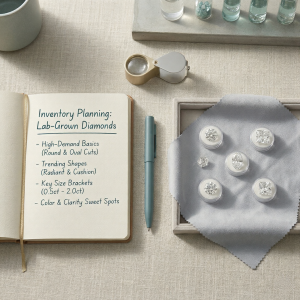
One of the clearest trends in lab-grown diamonds is the move toward larger stones. The 1.5 to 3 carat range has emerged as a high-demand segment, particularly for engagement rings and statement pieces. For B2B players, this is where depth matters. Instead of spreading inventory across multiple low-demand sizes, concentrating on these high-velocity carat weights can significantly improve turnover and revenue efficiency.
Round brilliants remain the backbone of any diamond inventory, offering consistency and broad appeal. However, relying solely on rounds limits growth potential.
Fancy shapes such as oval, emerald, and pear are gaining popularity due to their modern aesthetic and larger visual appearance. These shapes not only cater to evolving consumer tastes but also provide better margin opportunities. A balanced mix of rounds and trending fancy shapes ensures both stability and growth.
Colour Clarity
While lab-grown diamonds make premium grades more accessible, stocking only top-tier specifications is not always the smartest move. The sweet spot lies in VS1 to VS2 clarity and G to H color. These grades deliver excellent visual appeal while maintaining pricing flexibility. They allow businesses to remain competitive without over-investing in inventory that may not yield proportional returns.
Managing Pricing Volatility
Lab-grown diamond prices have been gradually declining due to increased production efficiency. This makes long-term stockholding a potential risk. A faster inventory turnover strategy is essential. By reducing holding periods and aligning purchases closely with demand, businesses can protect margins and stay competitive in a price-sensitive market.
Final Thoughts
Inventory planning for lab-grown diamonds is no longer about volume, but it’s about precision. Success lies in stocking what sells, optimizing for margin-friendly specifications, and staying agile in response to market shifts. For B2B players, the opportunity is significant, but so is the need for strategic discipline. Those who treat inventory as a dynamic, demand-driven function rather than a static asset will be best positioned to scale and lead in this rapidly evolving category.